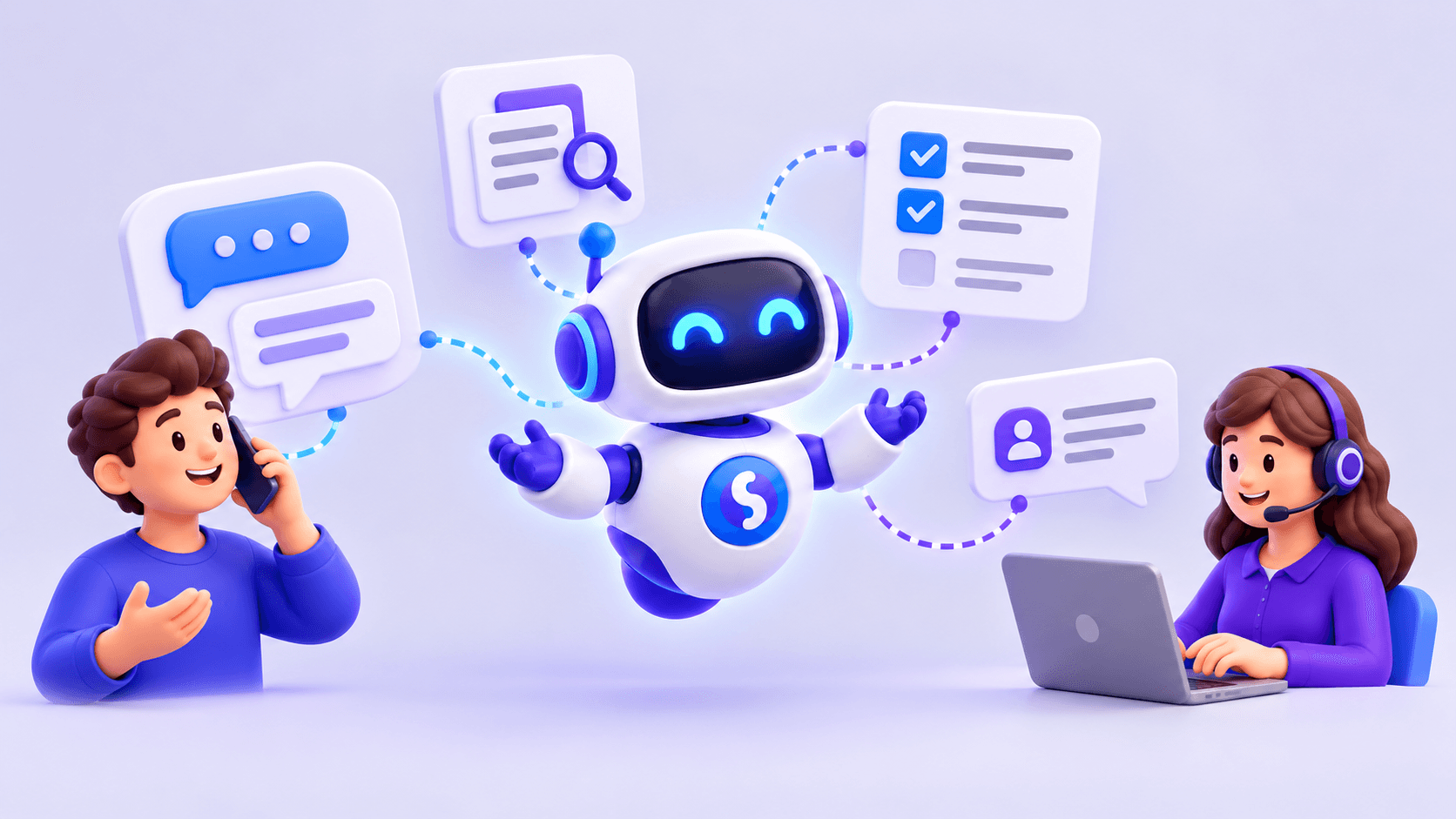
Businesses can use AI to answer common questions, find information, query systems, classify requests and support service operators. A useful implementation goes beyond adding a chat window to a website: it connects the conversation to the information and processes needed to help the customer.
This guide covers tasks AI can support, information it needs and situations where a person should intervene.
What does AI for customer service mean?
It means using models and automated systems to help answer, classify or resolve customer requests. Capabilities may include identifying intent, searching documents, checking stock or order status, retrieving CRM data, registering requests, routing conversations and assisting operators.
The level of automation depends on each system's capabilities, integrations and permissions.
How has AI changed customer service?
Earlier automation often relied on menus: select Sales, Support or Billing, then follow a fixed path. Language models let people describe their need directly, such as “I ordered last week and it hasn't arrived.”
The system can interpret the intent and identify the information needed to continue. With appropriate integrations, an agent could identify the customer, retrieve the order and respond with current information. Conversation becomes an interface to a business process.
What can be automated?
Frequently asked questions
Opening hours, products, services, commercial terms, policies, payment methods, documents and instructions are common starting points. Answers should reflect approved business information.
Products and availability
With an inventory integration, the agent can check whether a product is available instead of relying on an old catalog or file.
Order status
With appropriate identification and access, the agent can query the management system and report the available status information.
Request classification
AI can help direct requests to Sales, Support, Collections, Administration or Warranty teams, reducing manual sorting.
Collecting information
Before a handoff, an agent can gather the customer's name, company, email, customer number, product and reason for contacting the business. The receiving person can then continue with context.
What benefits can it offer?
Repeated questions may receive faster answers. Automation can handle several conversations at once and provide information outside business hours, while clearly communicating when human operators are available.
Operators may spend less time on repeated questions and more on situations requiring judgment, negotiation or empathy. Integrations can also reduce manual searches across internal systems. These are potential improvements to measure, not guaranteed outcomes for every implementation.
Customer service AI on WhatsApp
WhatsApp lets customers use a channel they already know. Someone can ask whether product ABC123 is in stock; a connected agent can retrieve availability, collect relevant commercial details and transfer the conversation to a salesperson if needed.
The channel's familiarity works alongside the company's information sources and handoff process.
AI on a business website
A website agent can help visitors while they browse. For example, someone exploring products might ask, “What options do you have for a company with 50 employees?”
The agent can use the catalog or approved documentation to guide the conversation, then collect the details needed for a salesperson to follow up when appropriate.
Can it connect to a CRM or ERP?
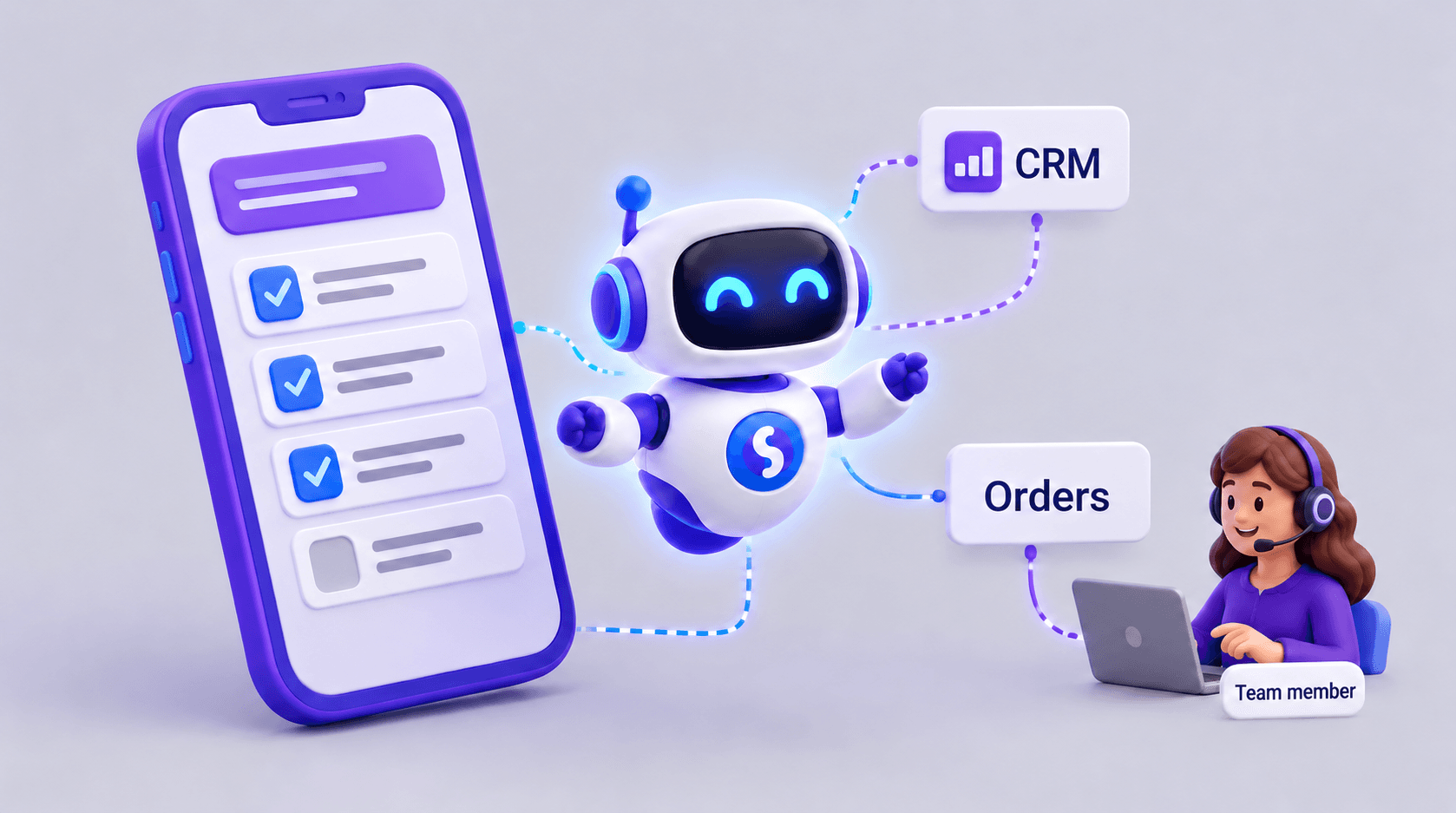
Yes, when suitable technical interfaces and permissions are available. A CRM might provide customer information, opportunities, earlier interactions or the assigned salesperson. An ERP might provide stock, orders, invoices, products and availability.
Ticketing systems, e-commerce platforms, databases and specific APIs can also be relevant. Each connection should have a defined purpose and access scope.
When should a person intervene?
Human intervention remains important for complex complaints, negotiation, exceptions, sensitive questions, approvals, frustrated users, insufficient information or an explicit request to speak to someone.
AI should make human service easier to reach and better informed. It should not become a barrier.
Example of a hybrid process
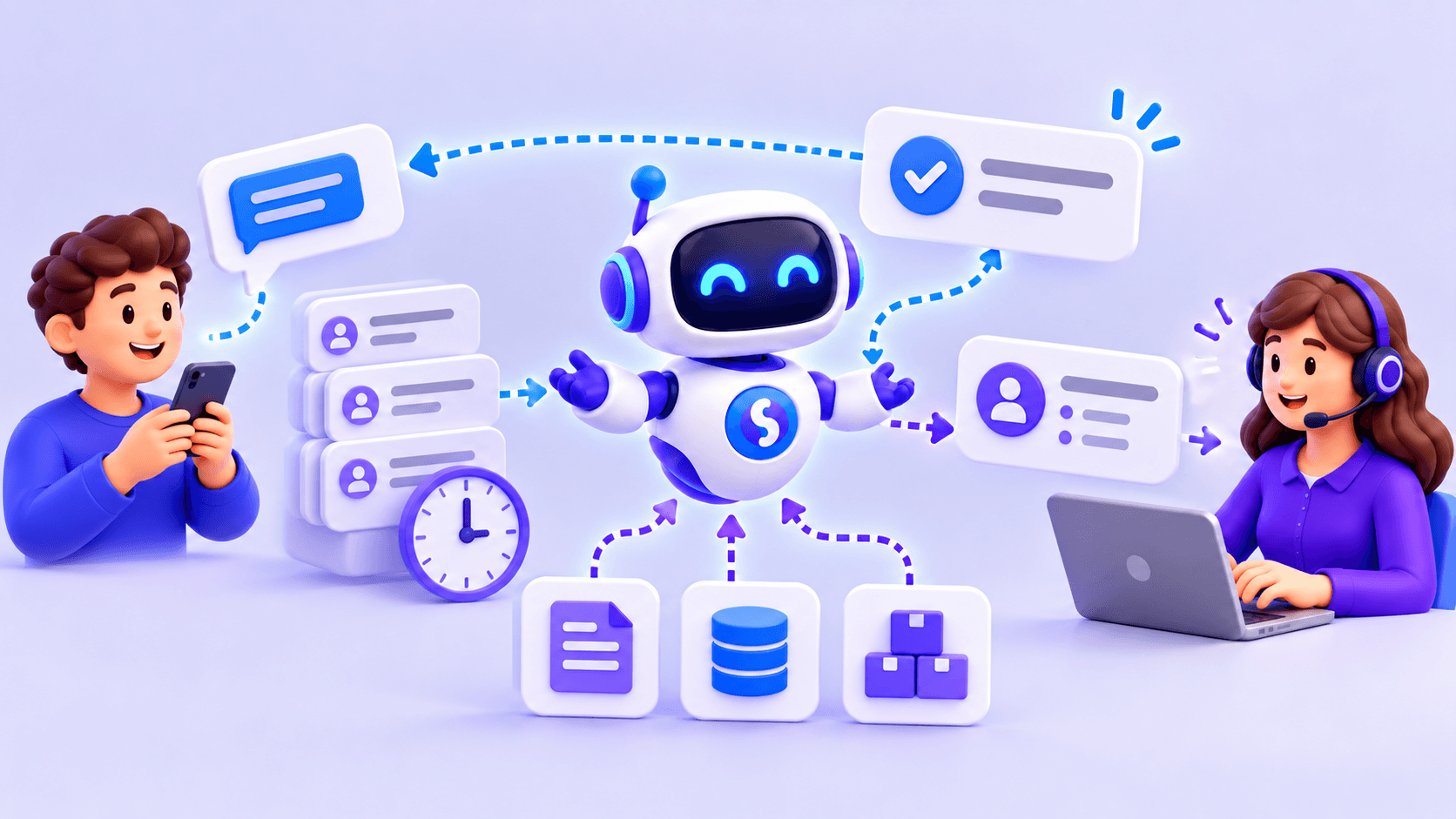
A customer writes on WhatsApp: “I need 50 units of product X for next week.” The agent could identify the product, check availability, collect company details, record the interest and hand the conversation to a salesperson.
The salesperson then knows the product, quantity, timing and customer. Automation has handled preliminary work, while the salesperson retains responsibility for the commercial conversation.
What information does the AI need?
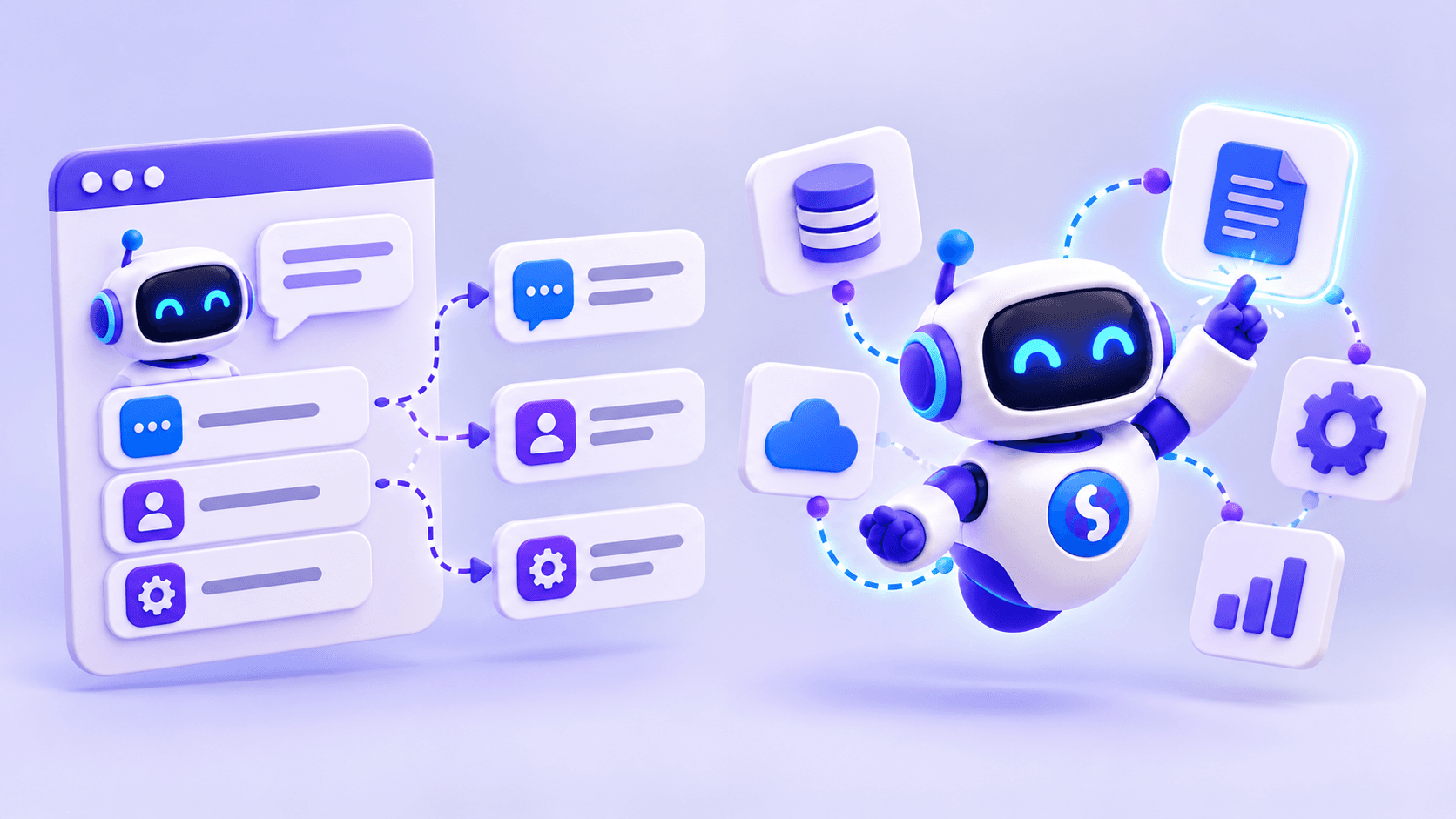
Possible sources include documentation, FAQs, catalogs, policies, manuals, databases, business systems and APIs. Source quality and freshness directly affect the answers.
A fast but wrong answer can be more frustrating than a short wait for a correct human response. Keeping information current is part of operating the system.
How can incorrect answers be reduced?
Use reliable business sources
Base business-specific answers on documentation and information controlled by the organization.
Set boundaries
Define which questions the agent can resolve and which require a handoff.
Query current systems
Retrieve changing data such as stock, prices and orders from appropriate up-to-date sources.
Review conversations
Supervision helps identify errors, unclear instructions and missing information.
Incorporate feedback
Use evaluation to improve sources and instructions through the agreed review process.
Which metrics matter?
Track incoming conversations, automatically resolved requests, handoffs, first-response time, resolution time, user satisfaction, common reasons for contact and unresolved questions.
No single number proves success. Connect the measures to the objective established before implementation and assess response quality alongside speed.
How to implement it progressively
- Review existing conversations to identify common needs.
- Select a limited set of repeated, manageable requests.
- Prepare documentation and identify systems to query.
- Test realistic cases before broad rollout.
- Review conversations, errors, handoffs and satisfaction, then improve.
The implementation should evolve as the business learns how customers actually use it.
Chatbot or AI agent?
A traditional chatbot may be enough for FAQs and simple flows. An agent may be useful when requests vary, several sources must be consulted or the process involves business tools and multiple steps. Both can work together.
Our AI agents vs. chatbots guide explores this choice in more detail.
Customer service AI with Sabio
Sabio implements AI agents for customer service and business processes through channels such as WhatsApp and web chat. Agents can use company documents and configured system integrations, with human intervention available for more complex requests.
Begin with the questions consuming the most time that can be handled within a clear scope. Add sources, tools and processes gradually as the initial use case is validated.