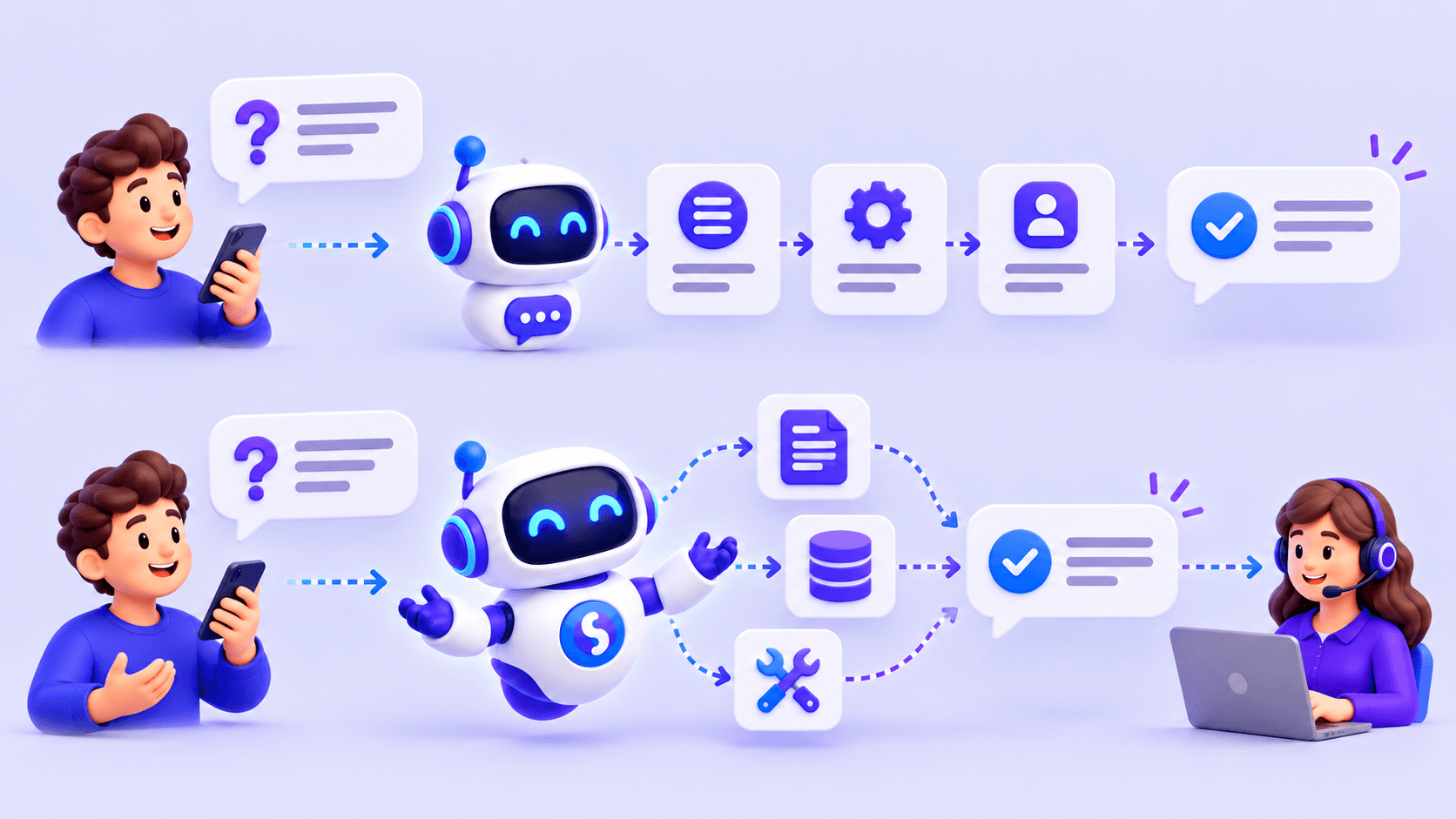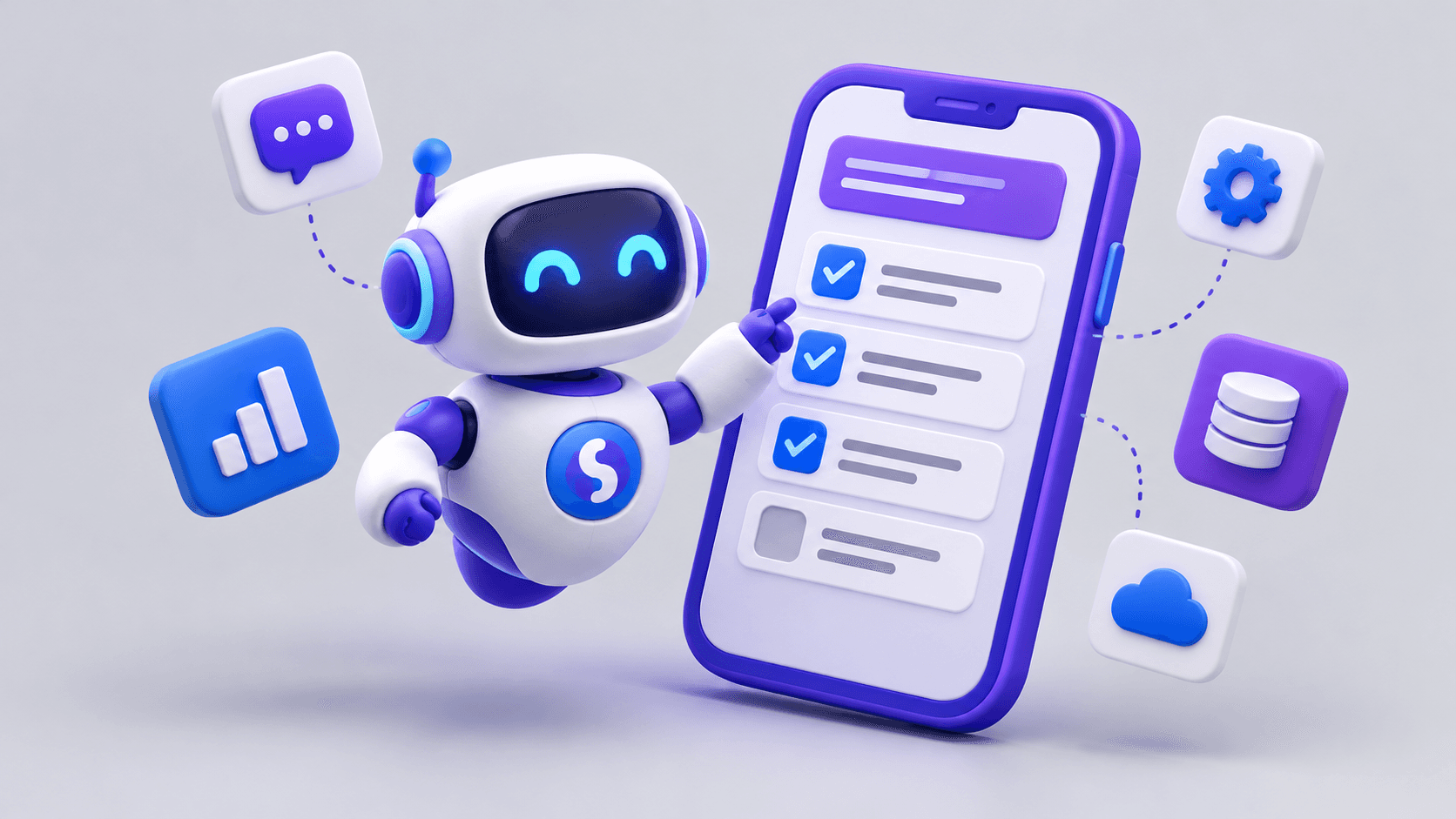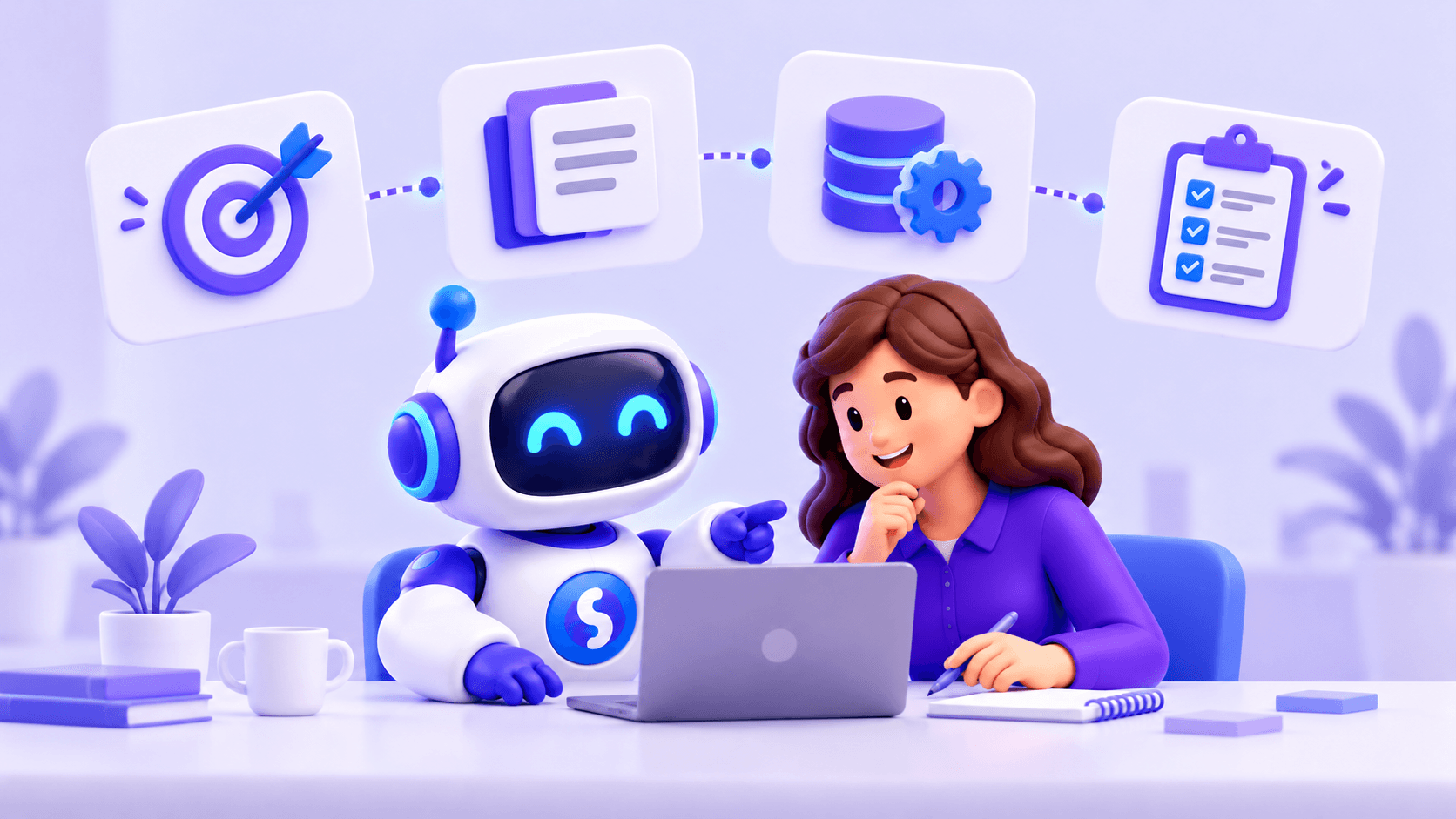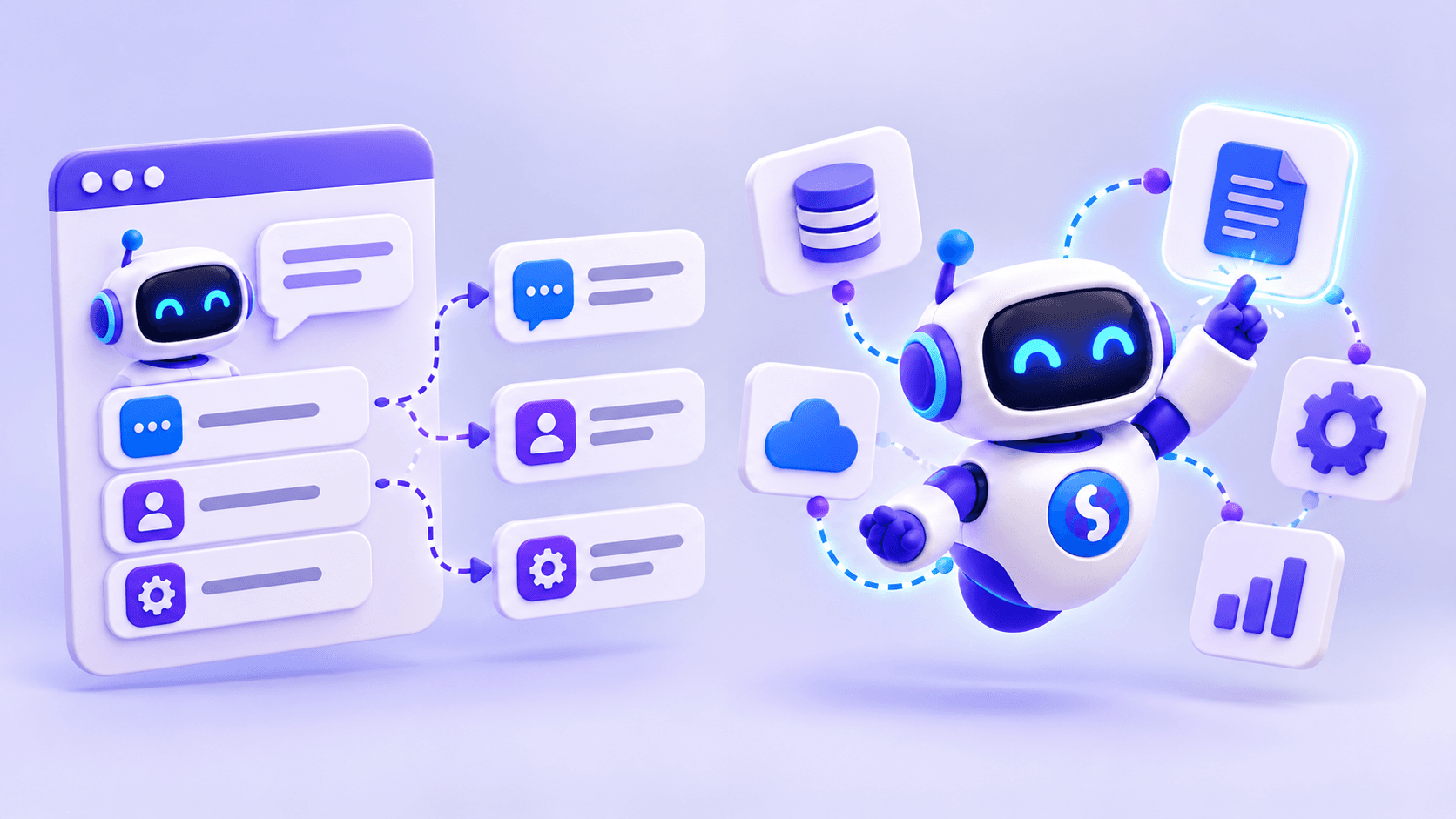
Chatbots and AI agents can both hold conversations, but they do not necessarily work in the same way or solve the same problems. A traditional chatbot follows predefined answers or flows. An AI agent can interpret a request, consult sources and use tools across several steps.
An agent is not always the better choice. A predictable process may be well served by a chatbot; requests involving changing information, interpretation or actions may benefit from an agent's flexibility.
Chatbot vs. AI agent: a quick comparison
| Feature | Traditional chatbot | AI agent |
|---|---|---|
| Operation | Defined rules and flows | Contextual interpretation and tools |
| Conversations | Usually structured | More flexible |
| Answers | Predefined or flow-based | Generated from context and available information |
| Dynamic information | Requires specific integrations | Can select and use tools |
| Actions | Programmed in advance | Can choose among authorized actions |
| Complexity | Usually lower | Usually higher |
| Predictability | High within the defined flow | Requires additional controls |
| Best fit | Simple, repeated processes | Variable or multistep processes |
This comparison primarily concerns traditional chatbots. Hybrid products combine language models, integrations and automated flows, making the categories less distinct.
What is a traditional chatbot?
A chatbot automates conversations using buttons, keywords, menus, rules, decision trees or predefined responses. For example, it might offer Sales, Support, Billing or Talk to a person. Each selection follows a configured path.
This is highly controllable: the company knows the possible routes and can specify what happens in each. Difficulties arise when someone asks for something outside those routes.
What is an AI agent?
An agent uses AI to interpret the user's need and decide how to attempt to resolve it. Consider: “I need 20 Lenovo laptops with 16 GB that we can deliver this week.”
The agent may need to interpret specifications, search products, filter by memory, check availability and quantities, then present options. Different tools can support those steps without requiring a separately scripted conversation for every combination.
The key difference: a flow or a goal
A traditional chatbot follows instructions such as: if the user selects A, do B, then show C. An agent works within a goal, available tools and defined limits, choosing steps within those boundaries. That flexibility requires additional controls.
When is a chatbot a good choice?
Simple frequently asked questions
Opening hours, addresses, payment methods and contact channels rarely require a complex agent when the information is fully structured.
Service menus
A chatbot can quickly route people to Sales, Administration, Support or Collections.
Conversational forms
It can collect information in a fixed sequence, such as name, company, email and question.
Highly predictable processes
When every alternative is known and the business needs to control the exact route, a defined flow can be preferable.
When is an AI agent useful?
Product questions
A customer looking for a laptop for design work, with 32 GB of RAM and a particular budget, may describe many combinations. An agent can interpret the requirements and search options.
Stock and prices
With the relevant connection, it can retrieve current data rather than relying on static answers.
Customer service and internal questions
An agent can interpret a problem, search documents, consult systems and decide whether a handoff is needed. Employees can similarly use natural language to access internal information.
Multistep processes
Finding a customer, retrieving orders, identifying a pending order and explaining its status is a useful example of a tool-based sequence.
Practical example on WhatsApp
A customer asks a technology supplier: “I need 10 Dell laptops with 16 GB of RAM. What's available?”
A simple chatbot might show categories, then a catalog, or transfer the request to Sales. An agent could identify the category, brand, memory and quantity, query the catalog and inventory, and present only compatible options with enough stock.
The difference is the work carried out to resolve the request, not merely how conversational the answer sounds.
Can a chatbot connect to an ERP?
Yes. System integrations are not exclusive to agents. A traditional chatbot can be programmed to query an ERP, CRM or API at a particular step. An agent may instead select among available tools based on the request.
The distinction concerns interpretation and autonomy, not the presence or absence of integrations.
Which is more reliable?
It depends on the process. A well-defined chatbot flow can be very reliable within its scope because it has fewer possible paths. An agent needs reliable information, permissions, validation, limits, monitoring, handoffs and confirmations for certain actions.
Replacing a structured flow with AI is not automatically an improvement.
Which costs less?
A chatbot may cost less when there are few flows, static answers, simple questions and limited integrations. An agent may require model usage, extra processing, integrations, monitoring and tool maintenance. It may also handle work that previously required a person.
Compare the cost of operating the entire process, including what can realistically be automated, rather than comparing software prices alone.
Can they work together?
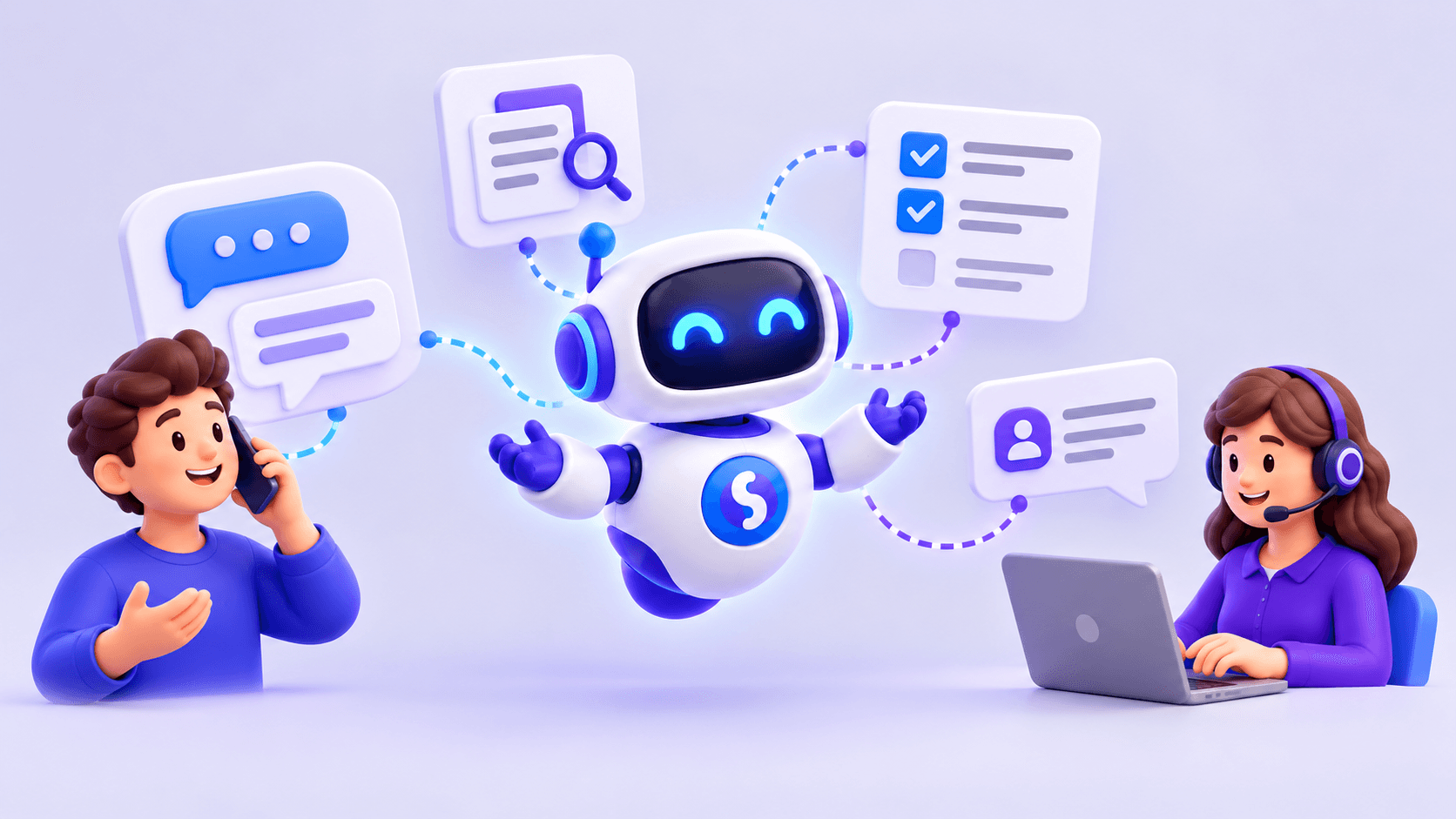
A hybrid approach may be the best fit. A chatbot can identify the request type and answer simple questions; an agent can handle requests requiring interpretation or system access; a person can take over exceptions or negotiations.
Each component serves the part of the process it handles best.
Which does my business need?
Choose a chatbot when questions are predictable, there are few routes, answers are known and actions are fully defined. Consider an agent when questions vary, natural language interpretation matters, multiple sources must be queried or tasks involve several steps.
Consider a hybrid when some steps need strict predictability while others need flexibility, with human intervention available when necessary.
A complete business example
Imagine 500 monthly requests: 300 ask about opening hours, 100 ask for Sales, and 100 request a server for 40 users with specific requirements and current availability. These are illustrative figures.
An elaborate agent adds little to the opening-hours answer, while dozens of menus would make the server request cumbersome. A suitable design could use automatic answers for hours, routing flows for Sales, an agent for complex product questions and people for negotiation.
The best solution is the one that handles the process well, not the one that uses the most AI.
Frequently asked questions
Are chatbots and AI the same thing?
No. Some chatbots use rules alone; others use AI.
Is every AI agent a chatbot?
No. An agent can run internal tasks without a chat interface.
Can a chatbot query an ERP?
Yes, through a programmed integration.
What advantage does an agent offer?
It can interpret more variable requests and select tools to work toward a goal.
Which is better for customer service?
Simple questions may only need a chatbot. Requests requiring interpretation, changing information or several steps may suit an agent.
Can flows, agents and people be combined?
Yes. They can work within the same process.
Chatbots and AI agents with Sabio
Sabio works with AI agents for business processes and conversational experiences that combine automation with human intervention. Agents can use documents, integrations, WhatsApp and web chat.
Implementation starts by identifying structured requests, requests requiring interpretation and situations that should stay with a person. The goal is to use the appropriate technology for each part of the process.