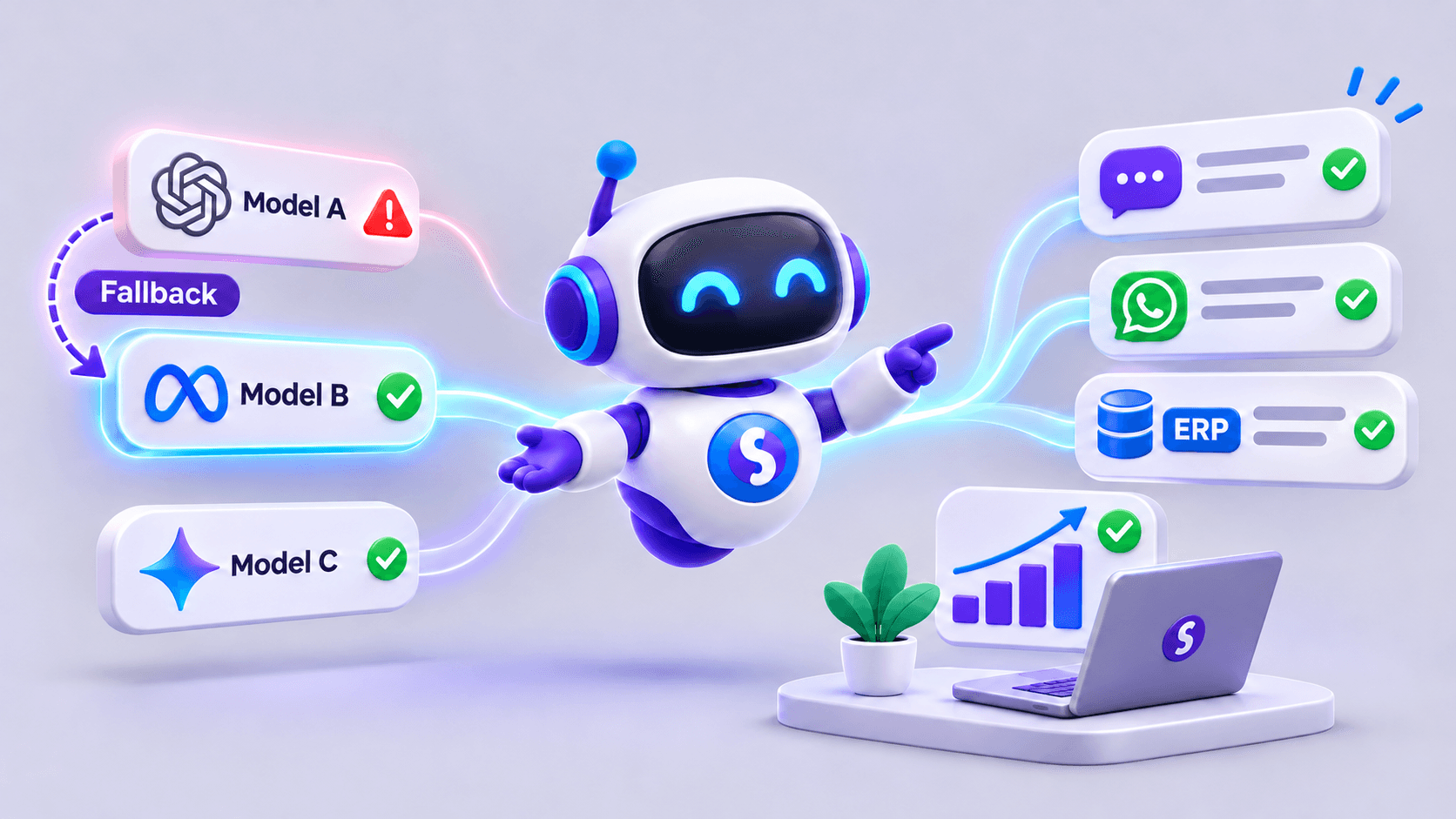
AI fallback is a backup strategy that uses a configured alternative when the primary model cannot handle a request. In a multi-LLM architecture, that alternative can be another model or provider that has been authorized and tested in advance.
When agents support customer service, sales or internal queries, choosing a capable model is only part of the decision. The business also needs a plan for failures, excessive delays and usage limits.
AI fallback reduces reliance on a single engine and provides a controlled way forward. Its effectiveness depends on configuration, backup compatibility and the other systems involved in the process.
What is AI fallback?
Fallback means having an alternative when the primary option cannot be used. For language models, this means defining a primary model, one or more backups and conditions for selecting them.
The usual path is:
Request → Primary model → Response
When a configured failure condition occurs:
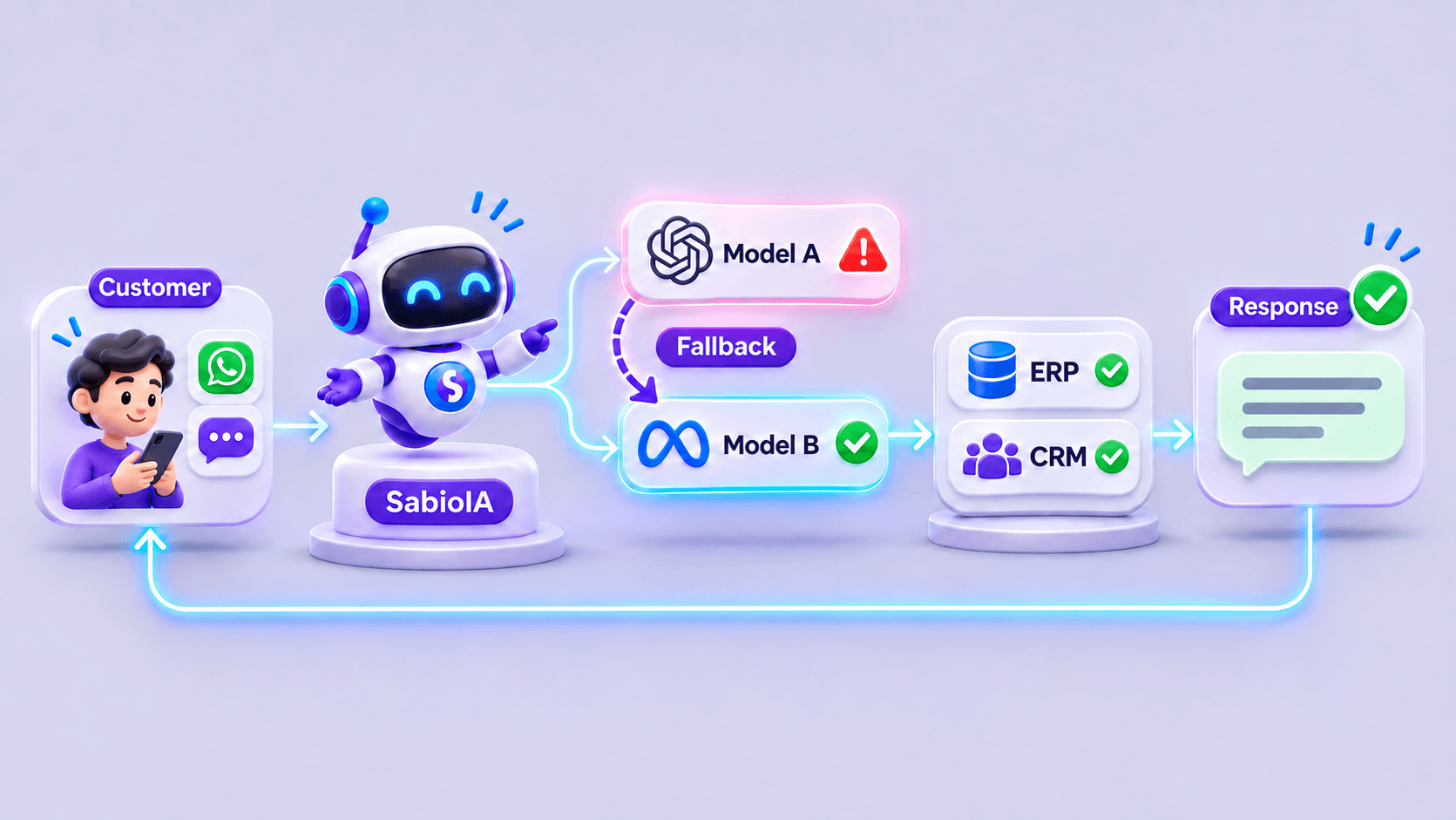
Request → Primary model failure → Backup model → Response or controlled outcome
The application can manage this change behind the agent without asking the user to select another model. It must reconstruct the necessary context and verify that the backup supports the task. If no alternative can handle the request, it should explain the limitation or offer a handoff.
Why it matters in business operations
An interruption has different consequences for different processes. An experimental assistant may be able to wait; an agent handling commercial questions or assisting employees needs a contingency procedure.
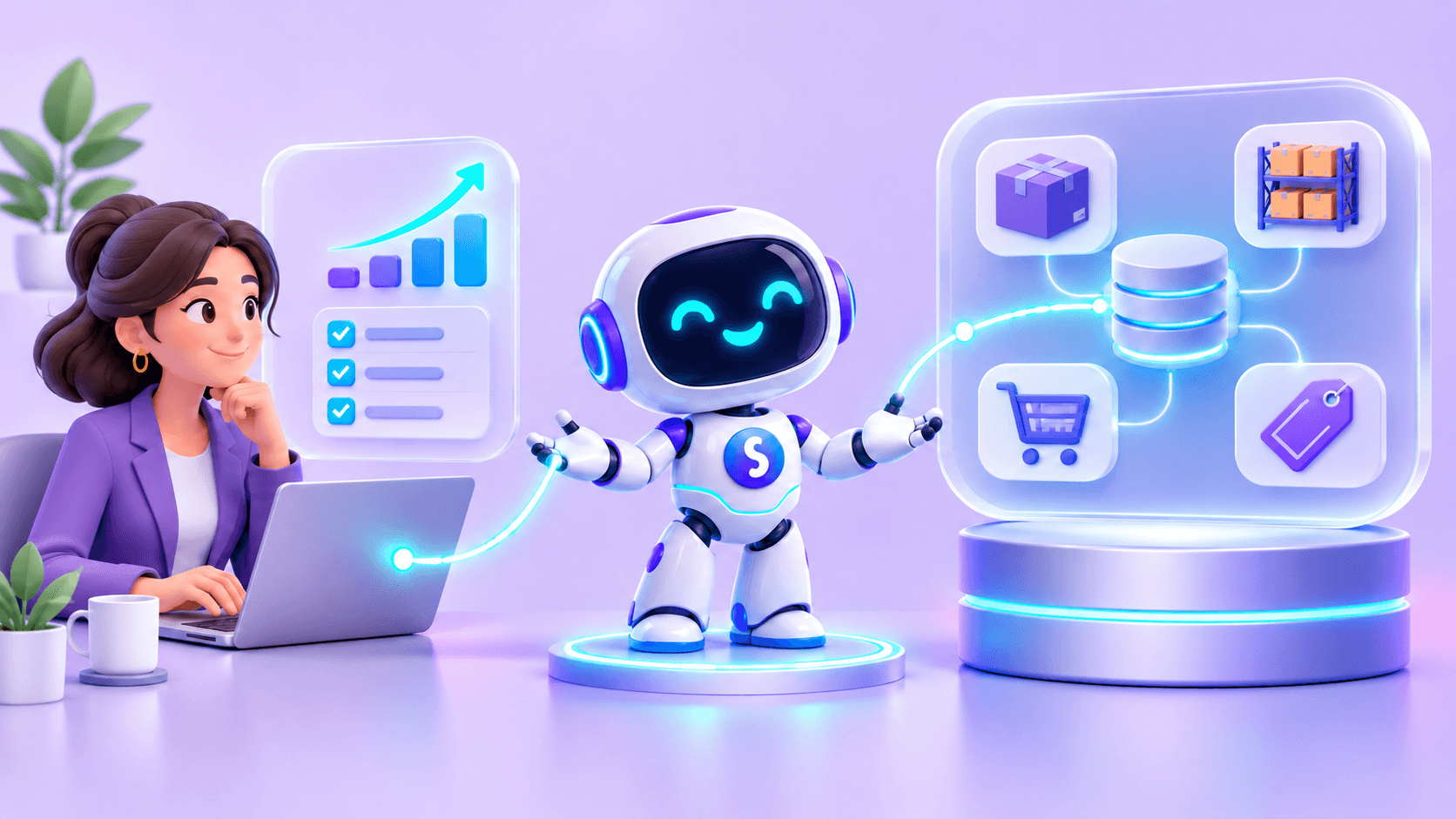
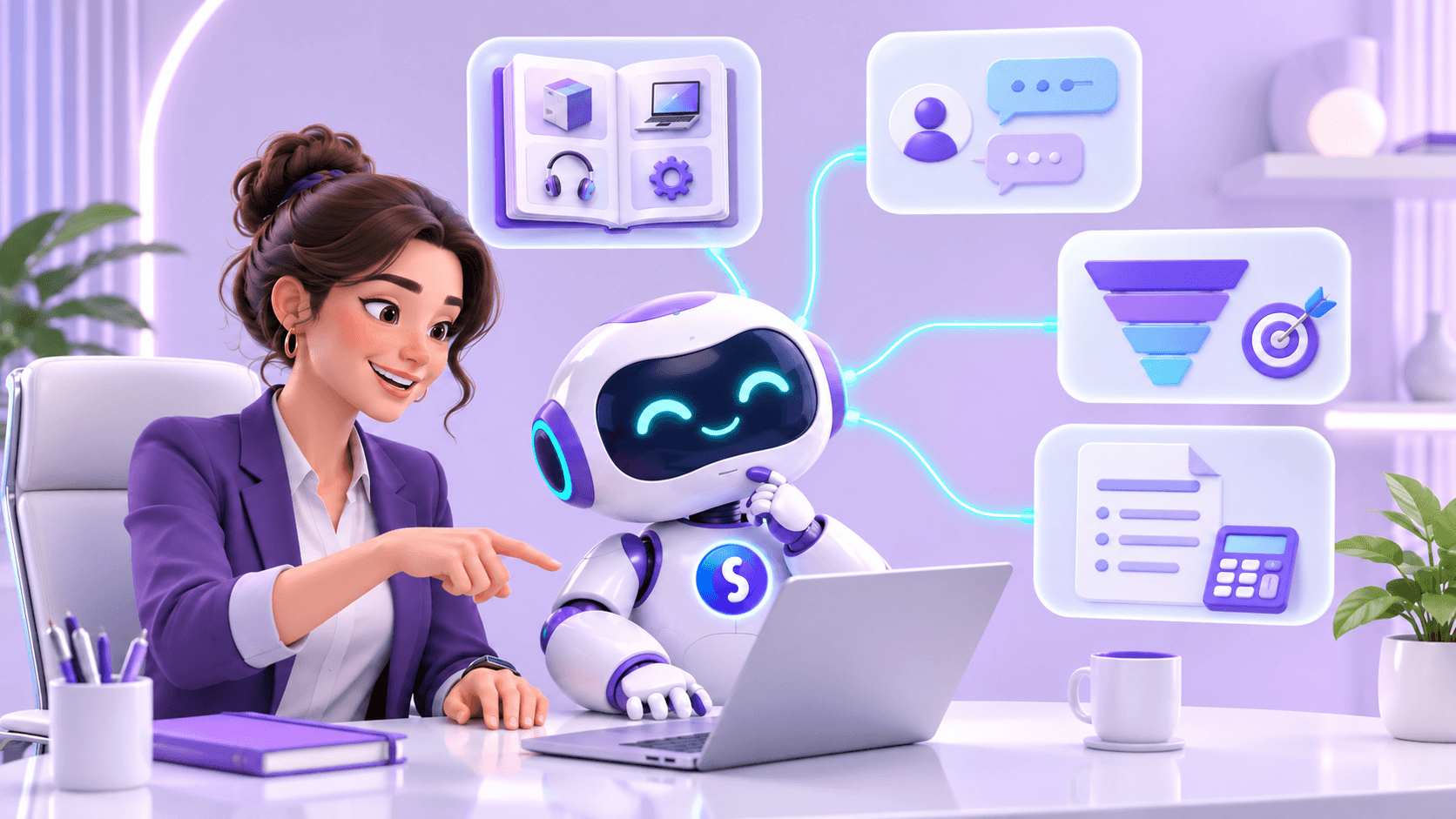
AI fallback can support WhatsApp queries, document retrieval, sales assistance or tasks connected to a CRM or ERP. Each requires an appropriate policy: answering a common question and modifying an order have different risks and requirements.
Start by identifying which tasks depend on the model, how long they can wait and what alternative users should receive if the automation cannot continue.
How fallback relates to multi-LLM architecture
A multi-LLM architecture can work with several language models. It may use them as backups or assign them to different tasks. Having several models available does not automatically configure a backup policy or send every request to every model.
In an AI fallback strategy, one model can serve as the primary option while others form an ordered backup chain. Selection should consider capability, availability, data handling and compatibility with the agent's tools.
Two models do not necessarily mean two independent providers. Shared infrastructure, regions or intermediary services can expose both to the same incident.
AI fallback and multi-LLM failover
AI fallback emphasizes the backup mechanism; multi-LLM failover emphasizes switching to an alternative after detecting a failure. In practice, the terms overlap and their meaning depends on the implementation. They are not separate availability guarantees.
LiteLLM's fallback and provider failover documentation uses both terms for switching to another model group after a failed call and configured retries. This illustrates a technical pattern; it does not imply that SabioIA uses that tool.
When evaluating a solution, ask what counts as a failure, which backup is attempted and how an unsuccessful request is finally handled.
When should a backup model be activated?
The policy should distinguish temporary incidents from problems that changing models will not solve. Common triggers include:
- Temporary service errors or an unavailable primary model.
- A response exceeding the maximum time defined for the process.
- Request or capacity limits when an authorized alternative is available.
Invalid credentials, malformed requests and missing permissions require different handling. A backup must preserve access controls and security restrictions.
Retries and total waiting time also need limits. An unbounded chain can increase delays. Microsoft's resiliency guide treats failover as part of a broader approach that includes error handling, service protection and alerts.
Example: an inventory question on WhatsApp
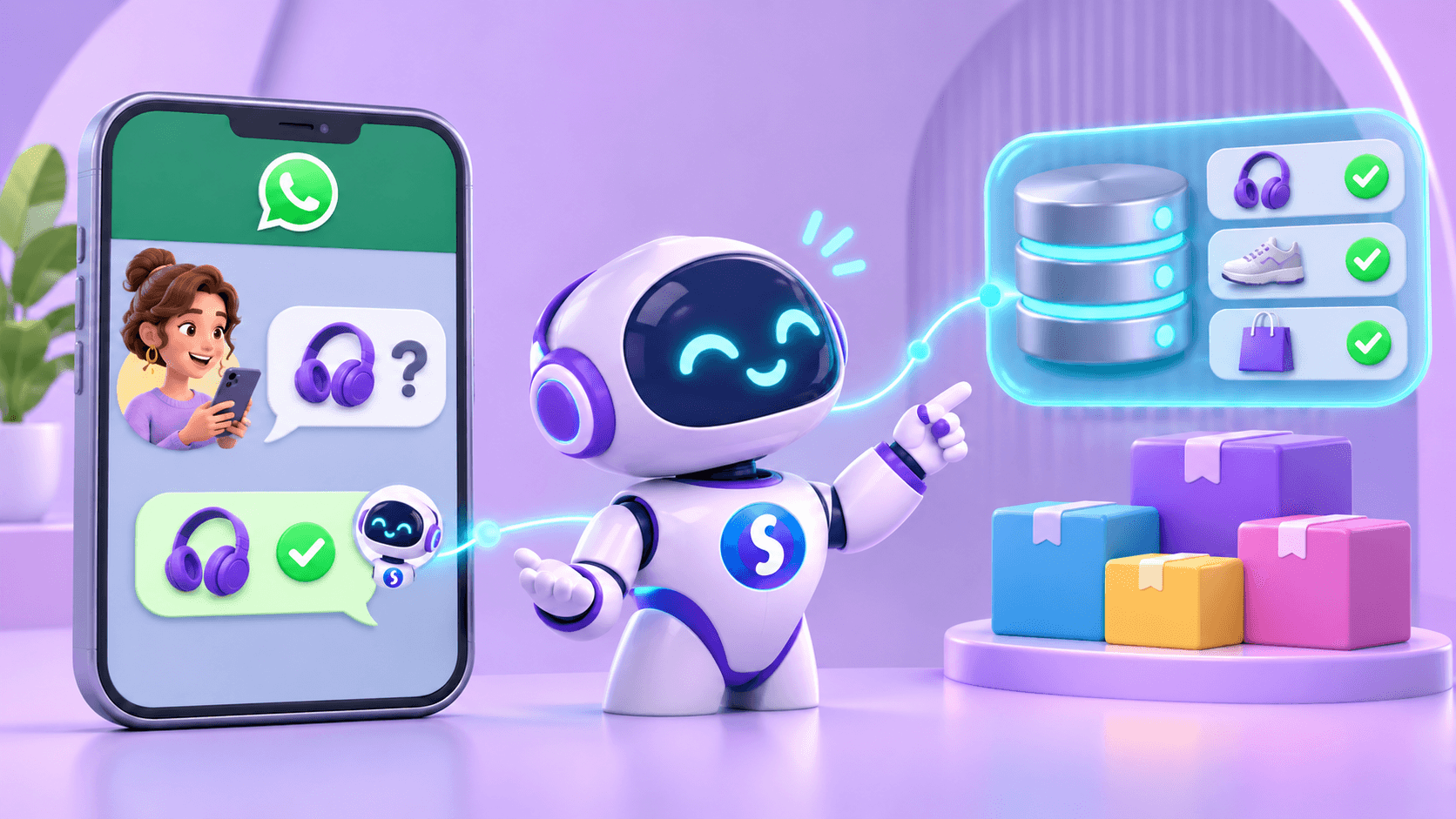
Suppose a customer asks: “Do you have 20 units of product ABC123 available?”
The model helps interpret the request. Inventory must come from an authorized system rather than the model's general knowledge.
With a tested backup configuration, the process could be:
- The customer sends the question through WhatsApp.
- SabioIA asks the primary model to interpret the request.
- If a configured failure occurs, it attempts an authorized alternative.
- The agent queries the ERP through an enabled tool and its permissions.
- It answers using the retrieved data or explains that the query cannot be completed.
If the ERP is unavailable, changing models will not restore inventory access. If an action may already have executed before an interruption, its state must be checked before repeating it. Retrying a lookup and creating another order are different operations.
What must be preserved when models change?
Continuity requires more than replacing a model name. The backup needs the relevant instructions and context, must respect the same permissions and must support the agent's required functions.
Models can differ in capability, response format, tool handling and context capacity. Identical answers and uninterrupted continuation of every conversation should not be assumed.
Before enabling a backup, test realistic requests, incomplete information, tool failures and questions outside scope. The alternative must also meet the data-handling conditions agreed for the implementation.
How to evaluate an AI fallback policy
A useful test deliberately makes the primary model unavailable and observes the entire request path. Receiving some text from a backup is not enough to validate the process.
Check three things:
- Did the backup activate for the expected reason and within the agreed time?
- Did it maintain answer quality, permissions and correct tool use?
- Was the event recorded, and was a controlled outcome offered if the backup also failed?
Track requests requiring fallback, completion outcomes, total response time and answer quality. These measurements help adjust the policy while keeping availability and accuracy distinct.
AI fallback in SabioIA
SabioIA supports a multi-LLM architecture with fallback to reduce reliance on a single AI engine. Its scope depends on the alternative models configured and the conditions agreed for each implementation.
Agent design should establish which failures activate backups, what information each model may receive, which tasks are authorized and when a person should intervene. Multi-LLM failover is part of that continuity design alongside integrations and process supervision.
The goal is to give the business a planned alternative during an interruption. This does not establish absolute availability: WhatsApp, APIs, business systems and the platform's infrastructure also need contingency procedures.
Frequently asked questions
Does AI fallback use several models simultaneously?
No. A request can use the primary model and switch only when a backup condition is met. Querying several models at once is a different strategy.
Are AI fallback and multi-LLM failover exactly the same?
They are related and are sometimes used interchangeably. Here, fallback emphasizes the backup alternative and failover the switch after a failure. The actual policy matters more than the label.
Must the user restart the conversation?
Not necessarily. The application can retain the necessary context, but it must adapt and validate that context for the backup model. Continuity depends on the implementation.
Does fallback keep an agent available at all times?
No. Other components can fail, or all alternatives can become unavailable. A contingency response or human handoff should be planned.