Qualifying leads with AI means collecting and organizing relevant commercial information before the team decides how to proceed. An agent can hold a conversation, ask clarifying questions, summarize answers and record data in an authorized CRM. Qualification should not be reduced to assigning an unexplained score.
This article focuses on the qualification process. For other commercial applications, see AI agents for sales: use cases.
What counts as a qualified lead for your business?
There is no universal definition. A contact may be valuable to one business while not yet ready for another. Before automation, sales and marketing need to agree which facts affect their next step: the need, organization type, volume, timeframe, location, contact's role or technical constraints.
Distinguish information stated by the person, facts verified in a system, and inferences made by the agent. “We need 200 units this month” is a statement. “The company has an active agreement” may be checked in a CRM. “They will definitely buy” is an inference and should not be recorded as a fact.
What a qualification conversation looks like
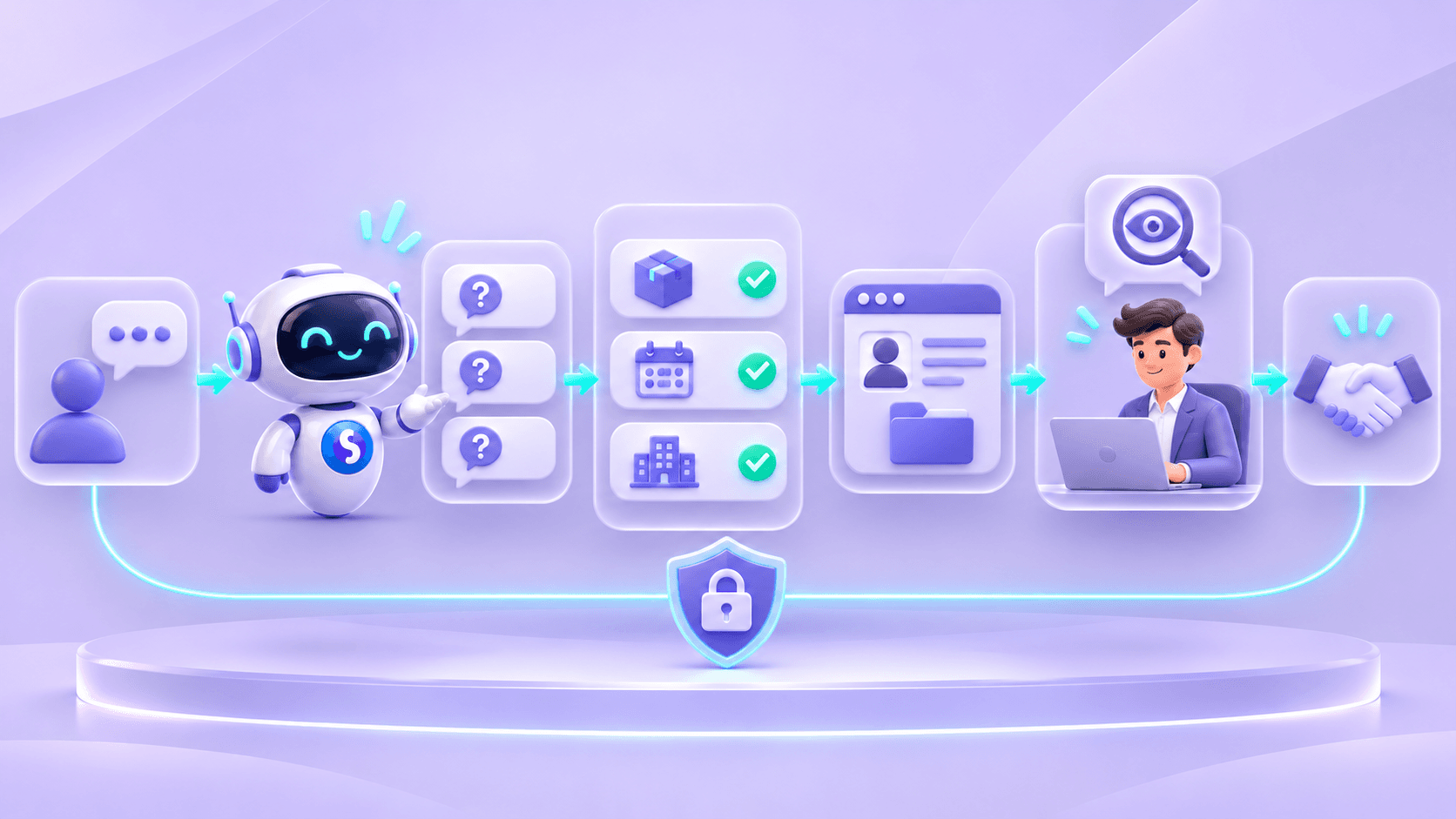
If someone asks about a business solution, the agent can answer the original question first and then request only information needed to move forward. A reasonable sequence is:
- Identify the need and product or service of interest.
- Ask about volume or scope if it changes the proposed solution.
- Learn the expected timeframe and preferred contact method.
- Confirm what may be shared with the sales team.
- Summarize the exchange and hand it over with outstanding questions visible.
Not every interaction needs to become a long form. If someone only wants a technical sheet, answering and offering a contact option may be enough. Demanding budget, job title and phone number before answering can damage the experience.
Criteria, rules and human review
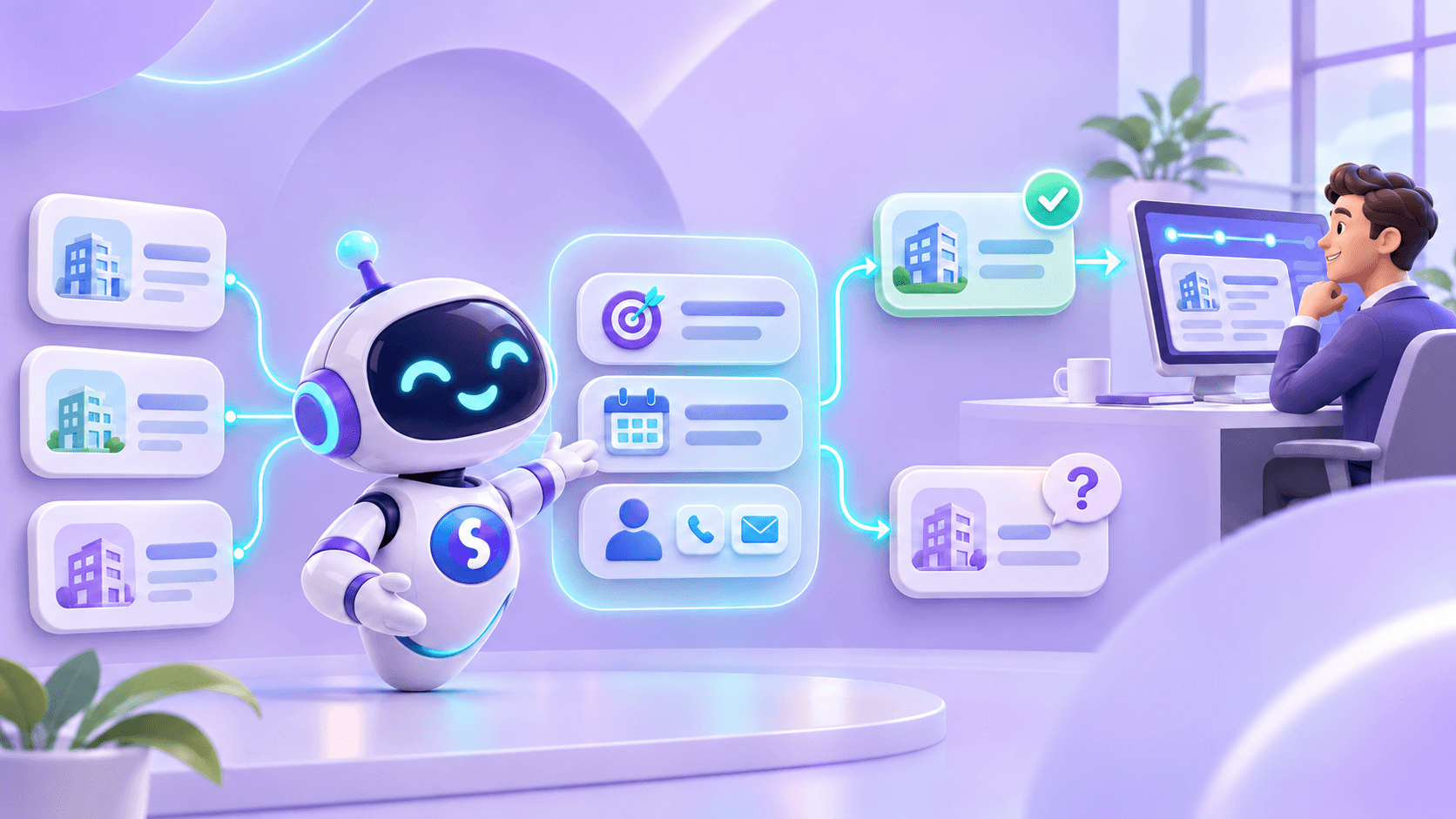
Criteria should be explicit. For example, an opportunity may go to the team once there is a defined need, approximate timeframe and contact method. Missing data might trigger one more question or a review; it is not evidence of a lack of interest.
If a score is used, staff should be able to see which factors contributed to it and correct them. Avoid criteria that infer sensitive personal characteristics or exclude people for reasons unrelated to their business need. Keep a responsible person involved in significant decisions.
The agent must also recognize out-of-scope questions and requests to speak directly with sales. An explicit request for human contact should not be blocked by an automated threshold.
How to connect AI lead qualification to a CRM
The conversation produces information the agent can structure: name, company, need, product of interest, timeframe and contact method. An authorized integration sends confirmed fields to the CRM, where they can be associated with a contact or opportunity for the sales team. The flow is conversation → AI agent → confirmed details → CRM → human review and follow-up.
What to record in the CRM
A useful record separates identity and contact details, stated need, product of interest, timeframe, inquiry source, the applicable consent or other basis for processing data, and a short summary. It should mark uncertain fields and link the conversation when permitted.
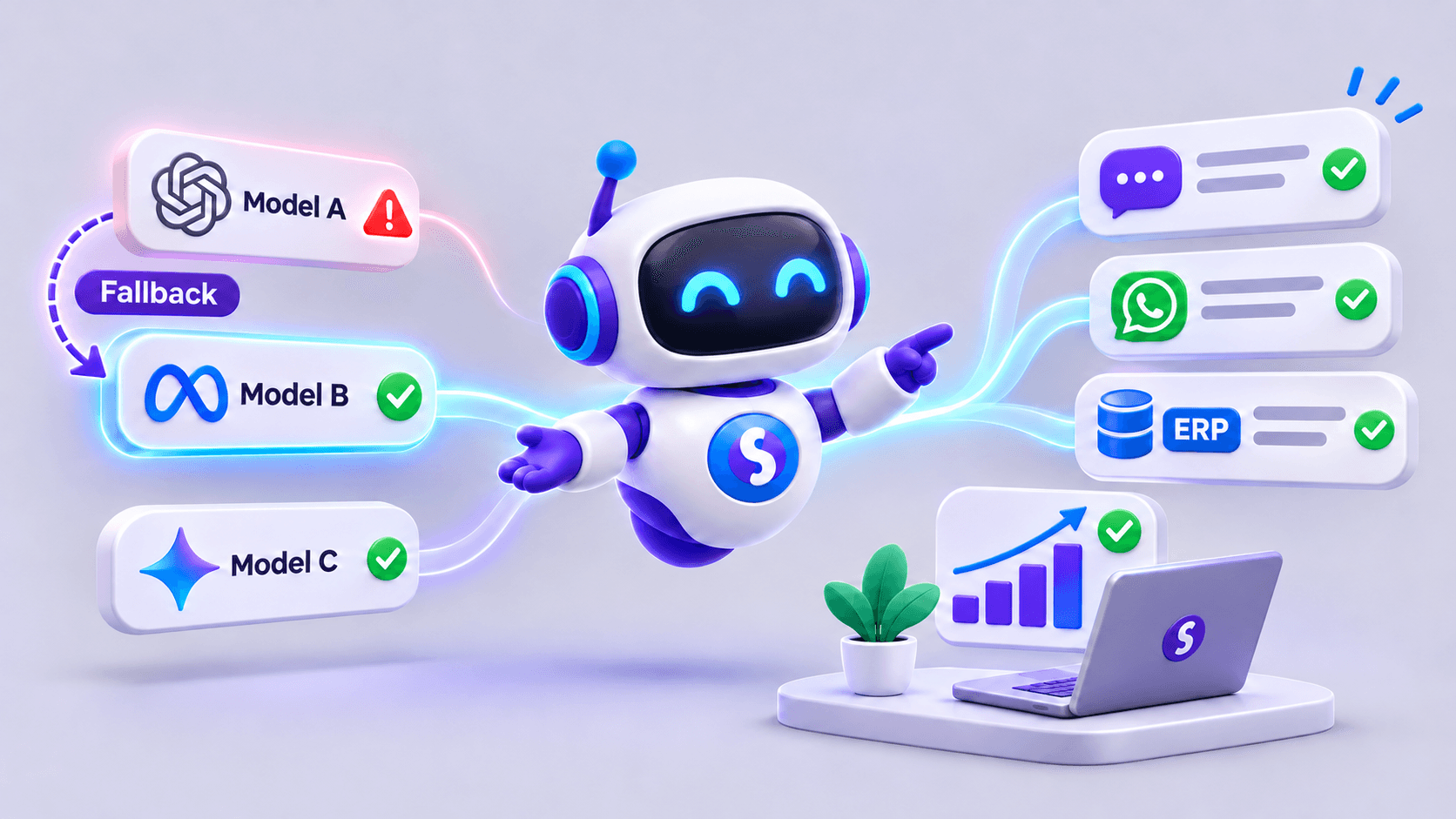
The writing tool needs validation: recognize existing contacts, preserve verified facts, assign the right owner and log errors. Once the CRM confirms the record, the agent can say the opportunity was saved. If the system is unavailable, it can retain context under the configured process and offer an alternative follow-up path.
A B2B example
A person writes, “We want to automate stock inquiries for three branches.” The agent might ask which system holds inventory, how many inquiries they receive, which channel they plan to use and when they want to evaluate a solution. If the person agrees to continue, it prepares a summary for sales. It need not promise that the integration is feasible before examining the ERP.
In this case, the technical detail may matter as much as commercial volume. Connecting an AI agent to an ERP explains what the team would verify next.
How to measure whether qualification helps
Counting completed forms is not enough. Compare the share of records with correct data, duplicates, conversations reaching the right owner, time to human contact and corrections made by sales. Review samples to find unnecessary questions or unjustified conclusions.
Measurement needs a baseline and a defined period. Without those, it would be wrong to claim that the agent increased conversions. Nor should the team optimize only for lead volume if the records become less useful.
Common mistakes
Asking for too much information up front, relying on an opaque score, inventing purchase intent, saving summaries without reviewing personal data and failing to hand off urgent cases are foreseeable problems. Design responses for missing information, CRM outages, existing contacts and requests to correct or remove data under applicable requirements.
A pilot can start without scoring: a few essential questions, a verifiable summary and human review. With evidence from actual use, the team can refine its criteria without turning assumptions into permanent rules.
How SabioIA can support this process
SabioIA can collect information during a conversation and connect to sales systems through available integrations or custom development. The platform has a Salesforce integration; for other CRMs, the team reviews each business's interfaces and permissions. The agent can prepare a verifiable summary and hand it to a salesperson with outstanding questions.
Frequently asked questions
Does automated qualification decide who deserves attention?
Not necessarily. It can organize information and prioritize a response while keeping contact options open for everyone. Criteria should fit the commercial process and remain reviewable.
Can it work on WhatsApp?
Yes, if the channel and CRM are configured for that flow. The agent should explain how data is used, answer the initial question and preserve context during handoff. WhatsApp as a business interface covers the channel in more detail.
Which detail should be requested first?
Ask for what helps answer the question or determine the next step. That depends on the product and process. A fixed questionnaire for every prospect often collects more data than necessary.